
AWS CloudFormation
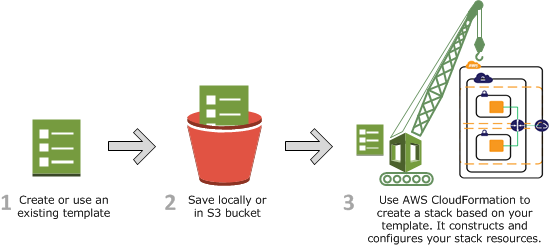
AWS CloudFormation is a fully managed service that enables you to model, provision, and manage AWS and third-party resources by treating infrastructure as code. With CloudFormation, you define your cloud resources and their configurations in a text file (using YAML or JSON), known as a template. CloudFormation then automates the creation and management of those resources in a safe, repeatable manner.
AWS CloudFormation Key Features
- Infrastructure as Code (IaC): Define and manage your entire AWS infrastructure using code, enabling version control and repeatability.
- Templates: Use YAML or JSON templates to describe resources such as EC2 instances, VPCs, S3 buckets, IAM roles, Lambda functions, and more.
- Stacks: A stack is a collection of AWS resources that CloudFormation creates, updates, or deletes as a single unit based on your template.
- Change Sets: Preview the impact of changes before applying them to your stack.
- Drift Detection: Identify differences between the stack’s actual resources and the template.
- Automation: Automate resource provisioning, updates, and deletion, reducing manual intervention and risk of errors.
Example Use Case
Suppose you want to deploy a web application with an EC2 instance, a security group, and an S3 bucket. Instead of manually creating each resource, you write a CloudFormation template that defines all resources and their relationships. You then launch a stack using this template, and CloudFormation provisions everything automatically.
Sample CloudFormation Template (YAML)
AWSTemplateFormatVersion: '2010-09-09'
Description: Simple web server with S3 bucket
Resources:
MyEC2Instance:
Type: AWS::EC2::Instance
Properties:
ImageId: ami-0abcdef1234567890
InstanceType: t2.micro
SecurityGroups: [MySecurityGroup]
KeyName: my-key-pair
MySecurityGroup:
Type: AWS::EC2::SecurityGroup
Properties:
GroupDescription: Enable HTTP access
SecurityGroupIngress:
- IpProtocol: tcp
FromPort: 80
ToPort: 80
CidrIp: 0.0.0.0/0
MyS3Bucket:
Type: AWS::S3::Bucket
Properties:
BucketName: my-unique-bucket-name-12345
Benefits
- Consistency: Ensures resources are created in a consistent and repeatable manner.
- Automation: Reduces manual setup and configuration.
- Version Control: Templates can be stored in source control systems for tracking and collaboration.
- Cost Management: Easily delete all resources in a stack to avoid unnecessary charges.