
AWS shared Responsibility Model
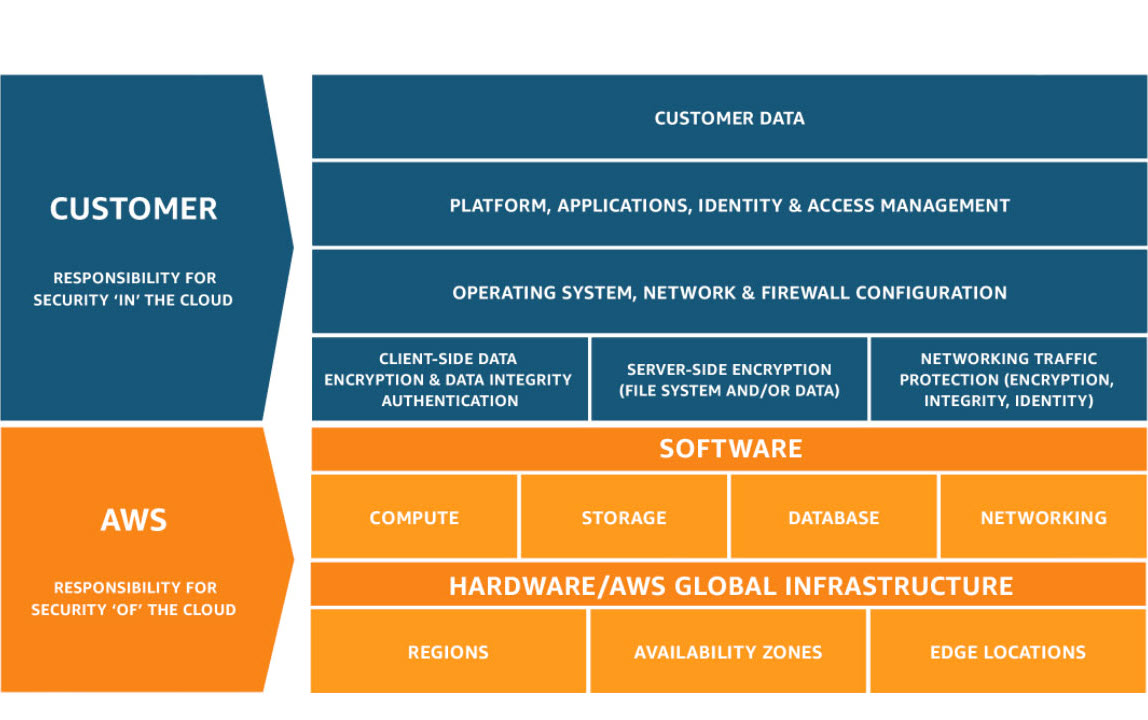
The AWS Shared Responsibility Model is a fundamental concept that outlines the security responsibilities between Amazon Web Services (AWS) and its customers. It clarifies what AWS is responsible for and what the customer is responsible for when using AWS cloud services. This model helps ensure that security is properly managed and understood by both parties.
"Security of the Cloud" - AWS Responsibility
AWS is responsible for the security of the cloud. This means AWS is responsible for protecting the infrastructure that runs all of the services offered in the AWS Cloud. This infrastructure includes the hardware, software, networking, and facilities that run AWS Cloud services.
AWS's responsibilities include:
- Physical Security: Protecting the global infrastructure, including data centers, hardware, and networking components.
- Network Security: Securing the network infrastructure, including firewalls, routing, and network access control.
- Compute: Securing the underlying compute infrastructure (e.g., EC2 instances, Lambda functions).
- Storage: Securing the underlying storage infrastructure (e.g., S3, EBS, RDS).
- Database: Securing the underlying database infrastructure.
- Regions, Availability Zones, and Edge Locations: Ensuring the security and resilience of these foundational components.
"Security in the Cloud" - Customer Responsibility
The customer is responsible for security in the cloud. This means customers are responsible for securing their data, applications, and configurations within the AWS environment. The customer's responsibilities vary depending on the cloud service model they are using (IaaS, PaaS, or SaaS).
Customer responsibilities generally include:
- Data: Managing and securing their data, including encryption, access control, and data integrity.
- Operating Systems: Configuring and patching guest operating systems (for IaaS services like EC2).
- Applications: Securing their applications, including application code, dependencies, and configurations.
- Network Configuration: Configuring network security groups, NACLs, and routing tables.
- Identity and Access Management (IAM): Managing user access, permissions, and credentials (e.g., IAM users, groups, roles, policies).
- Client-Side Data Encryption: Encrypting data before it's sent to AWS.
- Server-Side Encryption (File System and Data): Configuring encryption for data at rest and in transit.
- Security Awareness and Training: Ensuring their employees are aware of security best practices.
Shared Responsibility Model In IAM
AWS | User |
|---|---|
Global Network Security (Infrastructure) | Users, Groups, Roles, Policies management ad monitoring. |
Configuration and Vulnerability analysis. | Enable MFA on all accounts. |
Complience Validation. | Rotate all the keys. |
- | Use IAM tools to apply approperiate permission. |
- | Analyze acees patterns & review permission. |
Varying Responsibilities by Service Model:
The shared responsibility model shifts depending on the service model:
- Infrastructure as a Service (IaaS) - e.g., Amazon EC2:
- AWS: Responsible for the underlying infrastructure (physical security, virtualization layer).
- Customer: Responsible for the operating system, applications, network configuration, and data.
- Platform as a Service (PaaS) - e.g., Amazon RDS, AWS Lambda:
- AWS: Manages the underlying infrastructure, operating system, and database software.
- Customer: Responsible for their application code, data, and IAM configurations.
- Software as a Service (SaaS) - e.g., Amazon S3, Amazon DynamoDB:
- AWS: Manages almost all aspects, including infrastructure, operating system, and application.
- Customer: Primarily responsible for their data, access management (IAM), and client-side encryption.
Why is the Shared Responsibility Model Important?
- Clarity: It clearly defines the security boundaries, helping customers understand their role in securing their cloud environment.
- Risk Management: It allows both AWS and the customer to focus on their respective areas of responsibility, leading to better overall security.
- Compliance: Understanding the model is crucial for meeting compliance requirements (e.g., HIPAA, GDPR, PCI DSS), as it helps identify which party is responsible for specific controls.