
Cloud Computing Introduction
Cloud computing is a technology that delivers computing services—such as servers, storage, databases, networking, software, and analytics—over the internet (“the cloud”). Instead of owning and maintaining physical hardware and software, users can access these resources on-demand from cloud providers, paying only for what they use. This approach offers flexibility, scalability, and cost savings, making it popular for businesses and individuals alike.
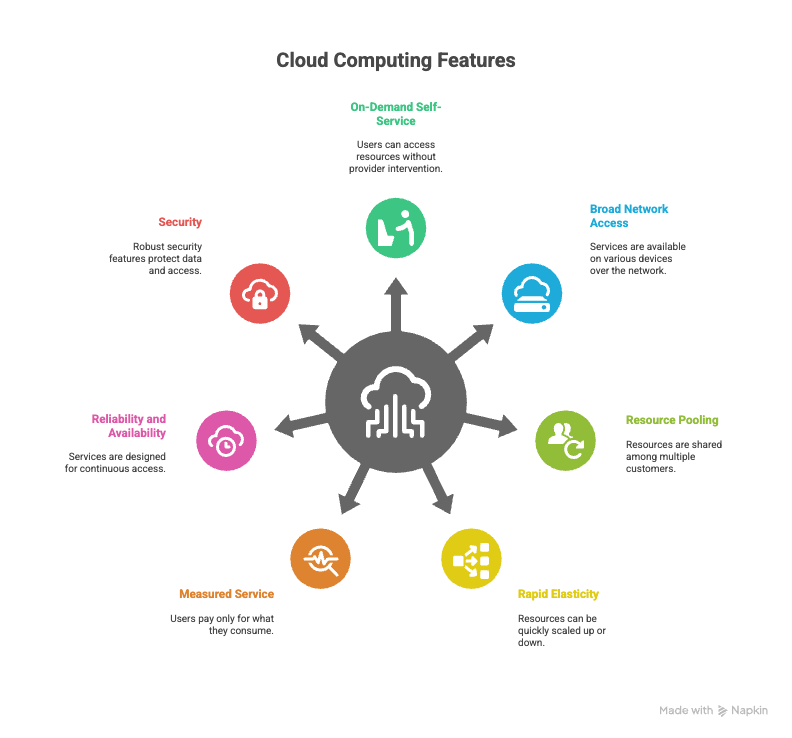
Key Features of Cloud Computing:
- On-Demand Self-Service: Users can provision computing resources automatically, without human intervention from the service provider.
- Broad Network Access: Services are available over the network and accessed through standard devices like laptops, smartphones, and tablets.
- Resource Pooling: Cloud providers use multi-tenant models to serve multiple customers with dynamically assigned resources.
- Rapid Elasticity: Resources can be scaled up or down quickly based on demand, providing flexibility and efficiency.
- Measured Service: Usage is monitored, controlled, and reported, so users pay only for what they consume.
- Reliability and Availability: Cloud services are designed for high availability and disaster recovery, ensuring continuous access.
- Security: Leading cloud providers offer robust security features, including data encryption, identity management, and compliance certifications.
Cloud computing supports various service models such as Infrastructure as a Service (IaaS), Platform as a Service (PaaS), and Software as a Service (SaaS), enabling users to choose the right level of control and management for their needs.